Colour Came First, Then Form, Then Meaning: A Renewed Artistic Direction

Long before finance, before negotiations, before sitting across tables discussing eight-figure works, there was colour, proportion, and structure. I was drawn very early to balance, to the way a composition can feel powerful without being loud. A painting where tension and harmony coexist. A building whose proportions feel inevitable. A stage where light alone creates emotion.
I did not analyse it at the time. I simply sensed that beauty follows order. Art shaped how I think long before it shaped my career.
As a teenager, I was more interested in exhibition spaces, museum rooms, and collections than in anything else. I would spend hours studying how a canvas holds space, how colour establishes authority, how silence in a sculpture can feel stronger than movement. I was fascinated by presence, the ability of something immobile to command attention without asking for it.
That instinct led me to London in the early 2000s. My training at Central Saint Martins was formative. It was not indulgent, it was rigorous. You were expected to justify your eye, to understand historical references, to situate your thinking within a broader cultural framework. Taste alone was insufficient. You needed structure, depth, and intellectual coherence.
That discipline became foundational.
Over time, my professional path evolved into the upper tiers of the international art market. Working alongside major collectors and seasoned participants reshapes your understanding quickly. At that level, art is never approached casually. It is analysed, contextualised, stress tested. The most sophisticated collectors understand provenance, institutional validation, rarity, timing. They understand that cultural importance and financial resilience are often closely linked.
Being exposed to that environment refined my own standards. I observed how exceptional works circulate discreetly between experienced hands. I saw how museum presence strengthens market depth. I witnessed how certain masterpieces maintain desirability across economic cycles and geopolitical shifts. That observation was not theoretical, it was lived experience.
It ultimately shaped the way I approach my role today.
As Art Portfolio Manager of the LEHNER INVESTMENTS ART COLLECTION FUND, my responsibility is to bring together aesthetic judgement and financial discipline. My role is not simply to identify attractive works, it is to construct a portfolio anchored in historical significance, structural scarcity, and long term resilience.
When I evaluate a work for the fund, I look for authority first. Presence. A sense of inevitability within the composition. But instinct alone is never enough. I analyse transaction history, auction performance, buyer concentration, institutional support, and global demand patterns. I assess whether the artist defined a movement, whether the work represents a decisive moment within the oeuvre, whether it can remain relevant not for five years, but for twenty.
In a financial environment dominated by speed and abstraction, art offers something structurally different. Supply at the highest level is finite. The most important artists are no longer producing. Institutional endorsement creates depth. Scarcity is not manufactured, it is permanent.
Managing an art portfolio requires restraint, patience, and the willingness to say no more often than yes. It requires conviction grounded in both culture and data. My role within the fund is to ensure that balance remains constant, discipline and vision aligned.
To me, there has never been a contradiction between culture and capital. Art at its finest demands structure and judgement, and finance benefits from that same discipline.
My journey did not begin with valuations, it began with learning how to see. That way of seeing, strengthened by education and years in the market, remains central to how I build and manage the portfolio today. After several years of structuring, refining, and patiently assembling the LEHNER INVESTMENTS ART COLLECTION FUND, we are now approaching a pivotal moment. The seeding phase, deliberate, methodical, and foundational, is drawing to a close.
In approximately one month, we expect to formally transition into the fund’s most decisive chapter, disciplined acquisition. What began as vision and architecture is now moving into execution at scale. It is an exciting inflection point, where preparation meets opportunity, where patience converts into action, and where the portfolio begins to take its definitive form.
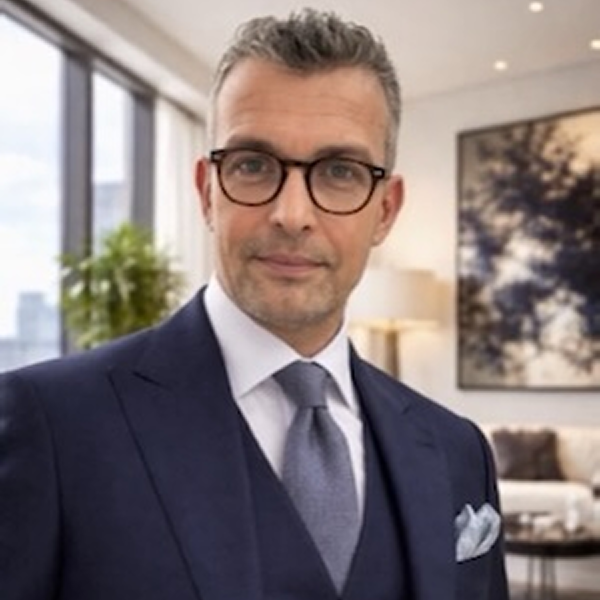
Portfolio Manager of the LEHNER INVESTMENTS ART COLLECTION FUND he oversees acquisition strategy and portfolio construction within the blue chip segment of the global art market. Trained at Central Saint Martins and shaped by years working alongside leading collectors his focuses on combining aesthetic judgement with disciplined financial analysis to build a collection anchored in historical significance and structural scarcity.